It Will Never Work in Theory

Software development research that is relevant in practice

Browsing Posts in Qualitative Studies

Sihan Li, Hucheng Zhou, Haoxiang Lin, Tian Xiao, Haibo Lin, Wei Lin, and Tao Xie: “A Characteristic Study on Failures of Production Distributed Data-Parallel Programs“. Proc. ICSE 2013. SCOPE is adopted by thousands of developers from tens of different product teams in Microsoft Bing for daily web-scale data processing, including index building, search ranking, and [...]

David Ameller, Claudia Ayala, Jordi Cabot, and Xavier Franch, How do Software Architects Consider Non-functional Requirements: An Exploratory Study, RE 2012, Chicago. Dealing with non-functional requirements (NFRs) has posed a challenge onto software engineers for many years. Over the years, many methods and techniques have been proposed to improve their elicitation, documentation, and validation. Knowing [...]

Thomas Green and Marian Petre, “Usability Analysis of Visual Programming Environments: a ‘cognitive dimensions’ framework”, Visual Languages and Computing, 7:131—174, 1996. The cognitive dimensions framework is a broad-brush evaluation technique for interactive devices and for non-interactive notations. It sets out a small vocabulary of terms designed to capture the cognitively-relevant aspects of structure, and shows [...]

Felienne Hermans, Martin Pinzger, and Arie van Deursen. “Supporting Professional Spreadsheet Users by Generating Leveled Dataflow Diagrams”, ICSE 2011. Thanks to their flexibility and intuitive programming model, spreadsheets are widely used in industry, often for business- critical applications. Similar to software developers, pro- fessional spreadsheet users demand support for maintaining and transferring their spreadsheets. In [...]

Earl T. Barr, Christian Bird, Peter C. Rigby, Abram Hindle, Daniel M. German, and Premkumar Devanbu: Cohesive and Isolated Development with Branches. FASE 2012. The adoption of distributed version control (DVC), such as Git and Mercurial, in open-source software (OSS) projects has been explosive. Why is this and how are projects using DVC? This new [...]

Laura Dabbish, Colleen Stuart, Jason Tsay, and Jim Herbsleb. “Social Coding in GitHub: Transparency and Collaboration in an Open Software Repository” CSCW 2012. Social applications on the web let users track and follow the activities of a large number of others regardless of location or affiliation. There is a potential for this transparency to radically [...]

A survey of the practice of computational science. In International Conference for High Performance Computing, Networking, Storage and Analysis, pages 19:1–19:12, 2011. (doi:10.1145/2063348.2063374) Computing plays an indispensable role in scientific research. Presently, researchers in science have different problems, needs, and beliefs about computation than professional programmers. In order to accelerate the progress of science, computer [...]

Daryl Posnett, Abram Hindle, and Prem Devanbu. “Got Issues? Do New Features and Code Improvements Affect Defects?“ WCRE 2011. There is a perception that when new features are added to a system that those added and modified parts of the source-code are more fault prone. Many have argued that new code and new features are [...]

WebFWD recently posted a video presentation by UC Berkeley’s Prof. Homa Bahrami and her student Claire Rudolph, who studied how Mozilla builds software. It’s full of useful insights about how a distributed mix of volunteers and paid professionals builds world-class software without drowning in information, and is a great example of research in progress. We’d [...]

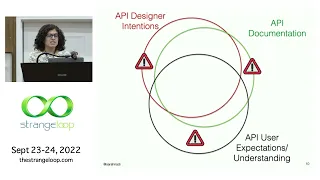
Martin P. Robillard and Rob DeLine. “A field study of API learning obstacles” ESE 16 (6), 2011. Large APIs can be hard to learn, and this can lead to decreased programmer productivity. But what makes APIs hard to learn? We conducted a mixed approach, multi-phased study of the obstacles faced by Microsoft developers learning a wide [...]